Research

Our motto - Enabling evolutionary research in the genomic era

research areas
Our interdisciplinary research lies at the interface between biology, computer science and statistics. We develop data-driven bioinformatic methods, statistical models of evolution, efficient algorithms and high performance computing techniques for reconstructing the Tree of Life from ultra-large phylogenomic data. We recently employ AI and machine learning to further boost phylogenetic inference.


Inferring the Tree of Life


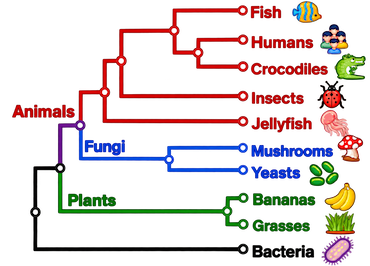
phylogenetic tree
We develop computational methods and models to reconstruct phylogenetic trees using maximum likelihood principle. This helps to resolve various evolutionary relationships across the Tree of Life. Highlighted methods include:

Virus Evolution and Epidemiology


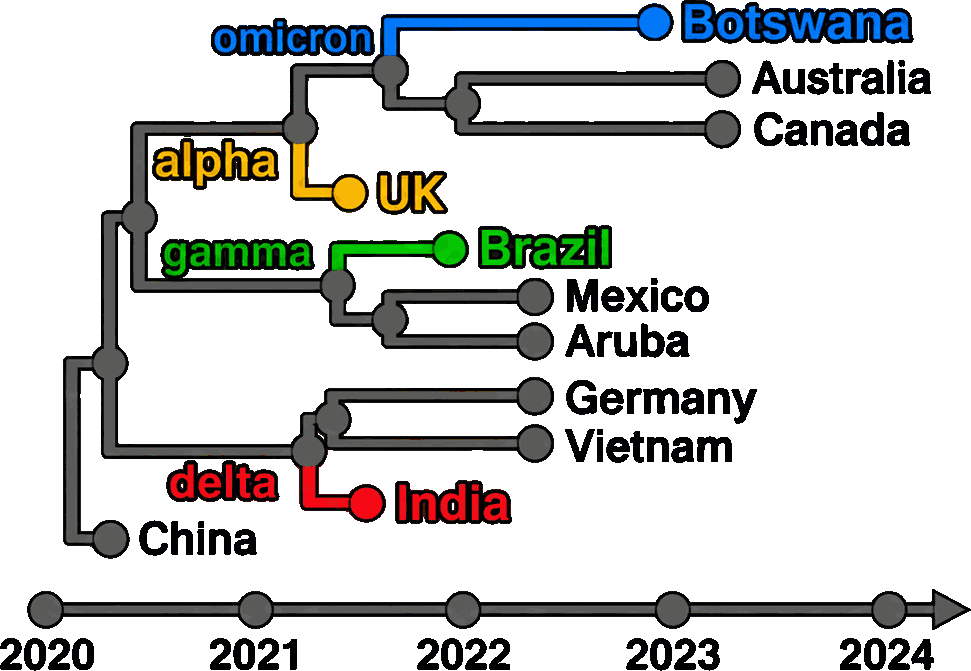
Virus tree
We work on efficient algorithms to infer evolution within very short timescales (e.g. in terms of years) to study emergence of variants of viruses and pathogens, such as the SARS-CoV-2 virus that caused the COVID-19 pandemic, which help to inform public health decisions. Such datasets are characterised by short and similar genomes but very many of them, in the order of millions for SARS-CoV-2, posing a major computational challenge. Our tool CMAPLE takes just a few days to accurately analyse 1,000,000 SARS-CoV-2 genomes, whereas existing methods may take years to complete.

High Performance Phylogenetic Computing


High Performance Computing for Phylogenetics
We work on High Performance Computing algorithms to deal with ultra-large genomic datasets. We employ multi-core CPUs and multi-node compute clusters to reduce the runtimes and memory footprints. We want to utilise GPUs to further accelerate computations with lower energy to promote green computing. Our ultimate aim is to fully exploit heterogenous clusters of many CPUs and GPUs.

AI for Phylogenetics


IQ-TREE logo
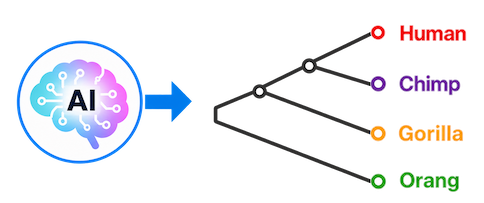
We are working towards renewing many phylogenetic problems using AI and machine learning. The aim is to speed up, improve, and embed with existing maximum likelihood machineries. In this process, we need to avoid simulation bias and make the AI models generalisable to real data. Our recent work includes IQ-NET to quickly estimate quartet trees using neural networks and ProtFinder to find best-fit protein models using deep neural networks and random forests.

Bioinformatics software


IQ-TREE logo
We implement all methods in user-friendly software tools to quickly reach out to the scientific community, enabling faster discoveries. A exemplar outcome is the widely used IQ-TREE phylogenetic software with thousands of users and millions of downloads. IQ-TREE has been continuously developed since 2011 by an international team from Australia, Austria, Canada, Germany, UK, US, and Vietnam. Recently, it has received a lot of code contributions from the community via its GitHub repository. Other software is listed here.

Collaborations with Biologists


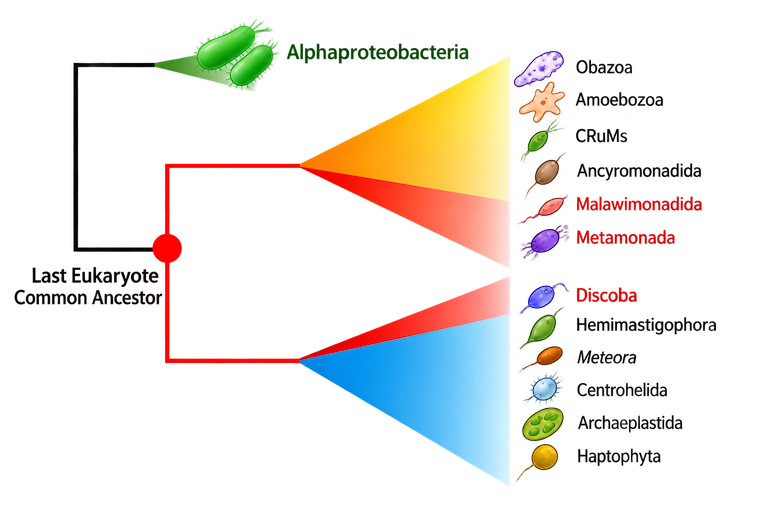
Last eukaryote common ancestor
Collaborating with biologists is an important part in our research, facilitating the quest to resolve many questions across the Tree of Life. This is not only to apply our tools to empirical data, but also to identify and overcome potential limitations. The figure illustrates a recent study in Nature, which used advanced models in IQ-TREE to decipher the root of all living organisms characterised by cells with a nucleus, including plants, animals, and humans.


© 2019-2023 Minh Bui Lab on Computational Phylogenomics @ School of Computing, Australian National University